How flake floors are built
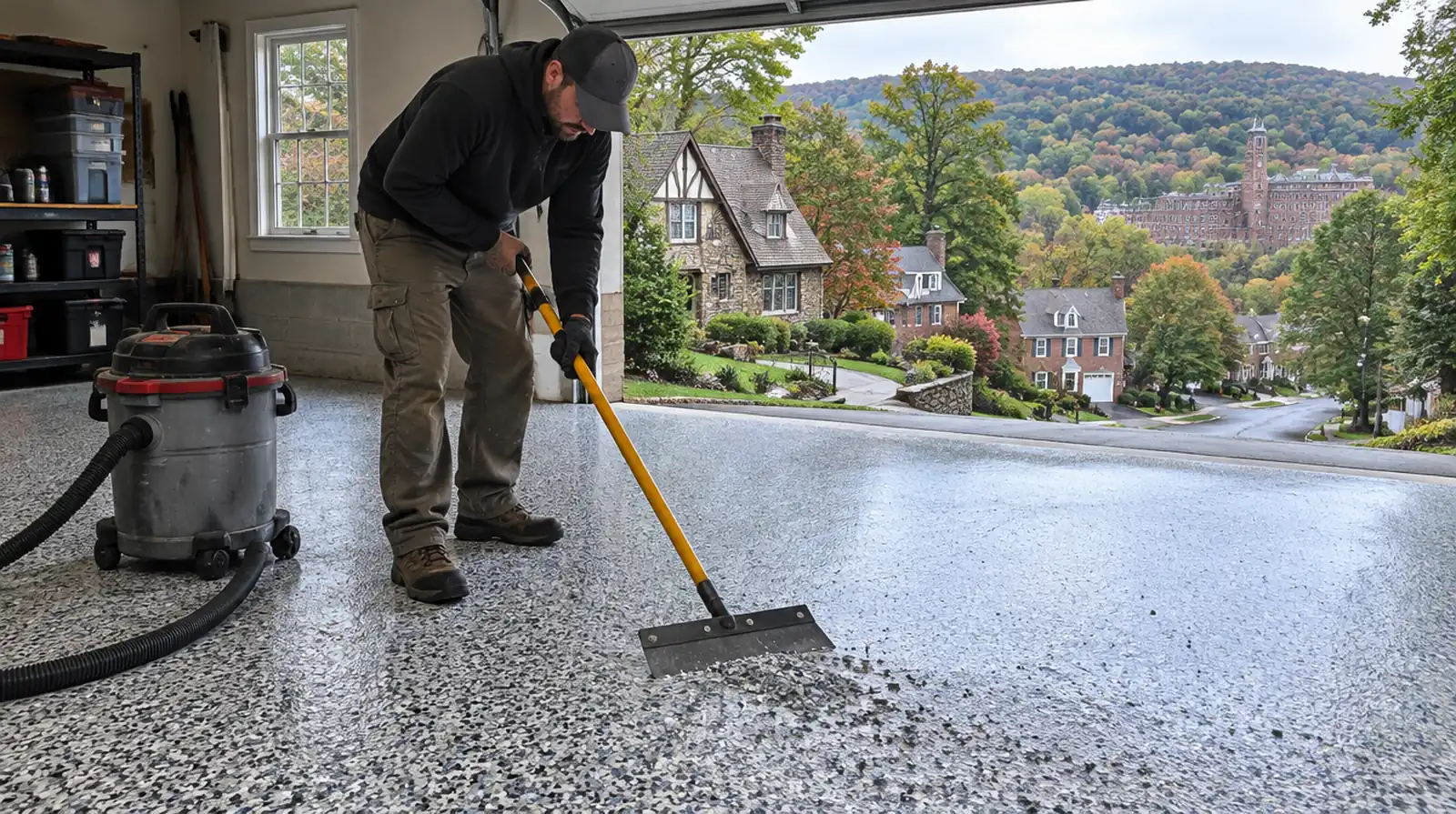
We begin with a ground, repaired and primed slab. A pigmented base coat goes down, and while it is wet, we broadcast decorative vinyl chips across the whole surface until no base shows. After the base cures, we scrape off loose chips, vacuum thoroughly and roll on one or two clear topcoats. The finished floor has a speckled, stone-like appearance and a gentle texture. The chips also add body to the system, making it tougher than a plain painted floor.
Why people choose flake
- It hides dirt: dust, leaves, salt residue and tire marks blend into the pattern.
- It adds grip: the texture helps when the floor is wet.
- It is forgiving: minor scratches and wear are much less visible.
- It is customizable: dozens of blends to match any home.
Matching older homes
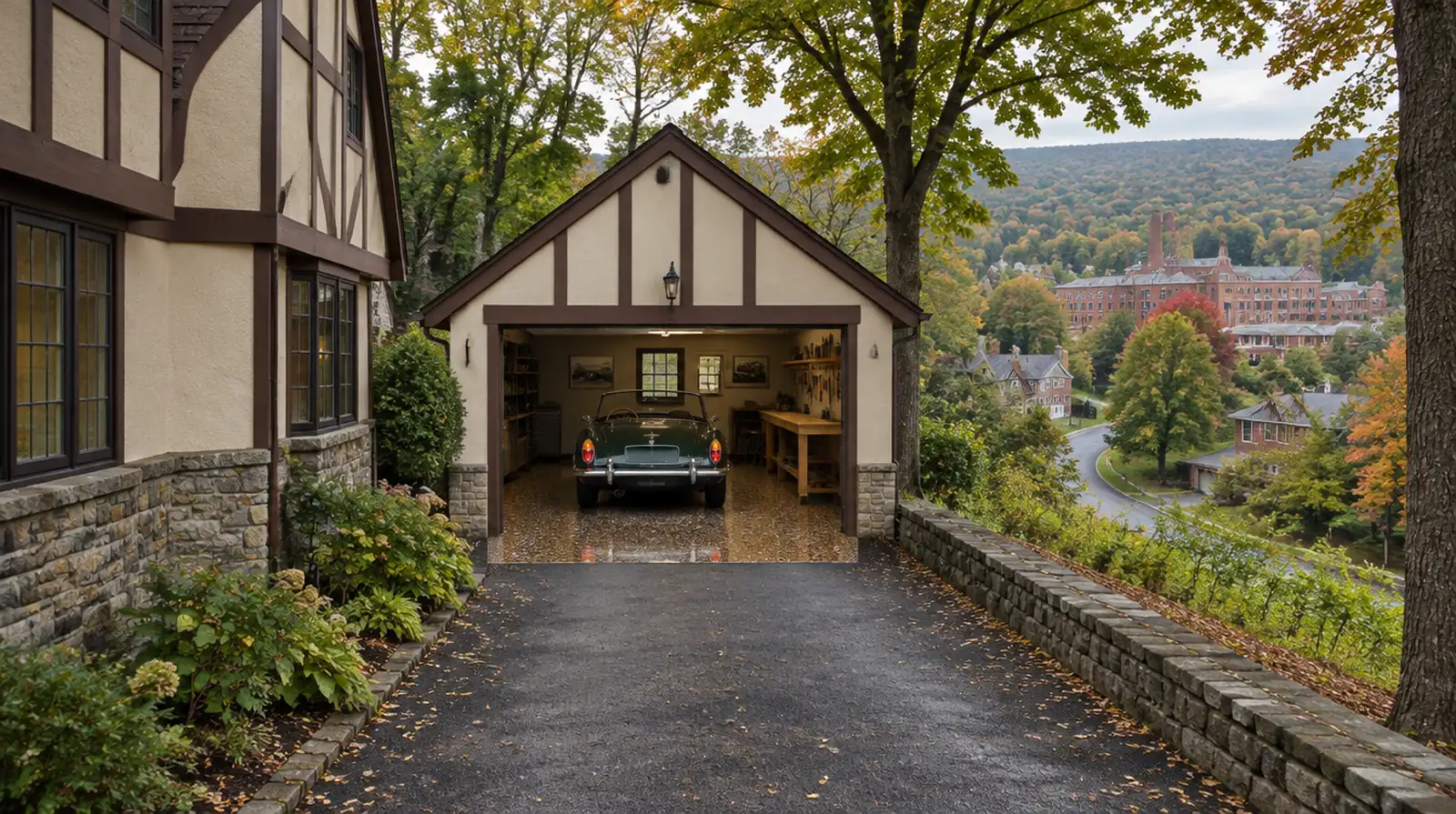
Many houses in town feature warm brick, stone, stucco and dark wood trim. Earthy blends with browns, tans and creams suit those homes and look great in detached garages and basements. Newer homes with gray siding and white trim often pair best with gray, black and white blends. We bring physical samples so you can see the chips in your garage light, which may be dim in older or tuck-under garages.
Chip size and coverage
Standard quarter-inch chips create a classic look. Smaller eighth-inch or micro chips give a finer, granite-like finish. Full coverage offers the most durability and texture, while partial coverage lets a solid base show for a more modern style. We generally recommend full coverage for garages and partial coverage for basements or low-traffic rooms if you prefer a lighter look.
Basements and laundry rooms
Flake floors are a great fit for basements and laundry rooms because they resist water, hide scuffs and clean easily. In older basements, we always test moisture and may use a vapor-mitigating primer first. The result is a floor that can handle a washing machine overflow or a sump that struggles during a heavy storm, with no carpet to rip out afterward.
Commercial uses
We install flake floors in locker rooms, restrooms, break rooms, retail back areas, salons, veterinary offices and showrooms. Commercial blends can include extra topcoat thickness and anti-slip additives. For harsh chemicals or heavy machinery, we may recommend our commercial systems instead.
Installation schedule
A standard two-car garage flake floor takes about two days. Day one includes grinding, repair, primer, base coat and chip broadcast. Day two covers scraping, vacuuming and topcoats. With fast-curing polyaspartic topcoats, some floors can be completed in one day. You can walk on the floor shortly after the final coat and drive on it in a few days.
Easy upkeep
Sweep regularly, rinse off winter salt and mop with a neutral cleaner. Avoid harsh acids or solvents. Flake floors are very forgiving, and many owners say the floor looks almost new years later. If it ever needs a refresh, we can add a new clear topcoat without redoing the whole system. Want something faster? See our one-day polyaspartic floors.
Every flake estimate includes a written color choice and chip size, so the finished floor matches what you approved.
Free color samples
Choosing a blend from a small screen photo is hard. We bring sample boards in several popular blends and leave them with you for a day if needed, so you can see how they look in morning and evening light next to your cabinets, walls and garage door. Many customers are surprised by how different a blend looks in person.
Your estimate also notes the topcoat type and how many coats we plan to apply.
to pick your flake blend.
Call (973) 520-0632 for a free estimate.