What sealing does
Concrete looks solid, but it is full of tiny capillaries that pull in water. In winter, that water freezes and expands inside the surface. Repeat the cycle dozens of times a season and the top layer begins to scale, spall and crumble. Road salt and ice melt make it worse by drawing in more water and attacking the cement paste. A quality sealer fills or lines those pores so water and salt bead up and run off instead of soaking in. It is a small investment compared with rebuilding a set of steps.
Where we seal
- Front stoops and steps: the most salted, most walked and most visible concrete on the property.
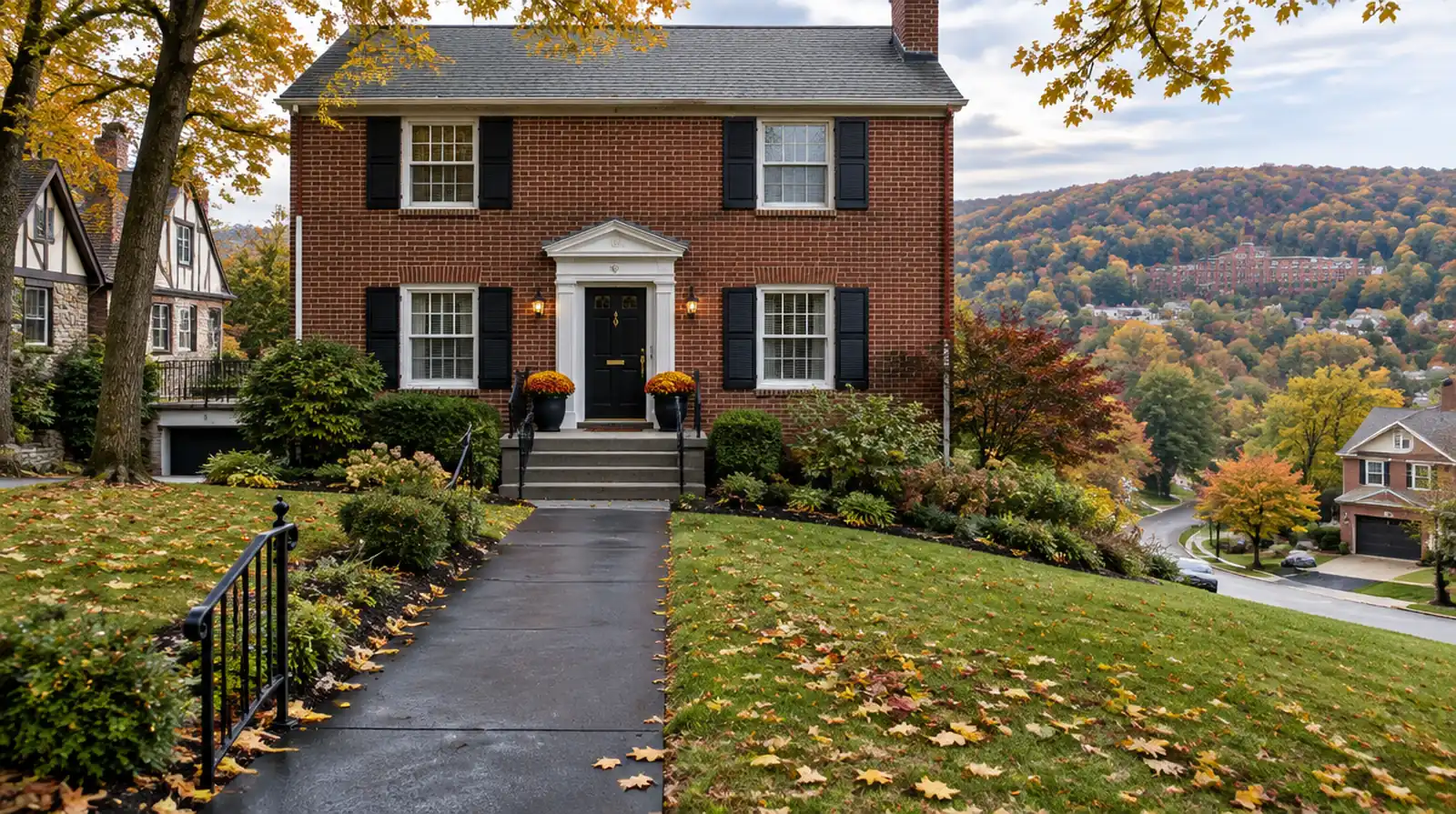
- Walkways: including the long stepped paths many hillside homes use to reach the front door.
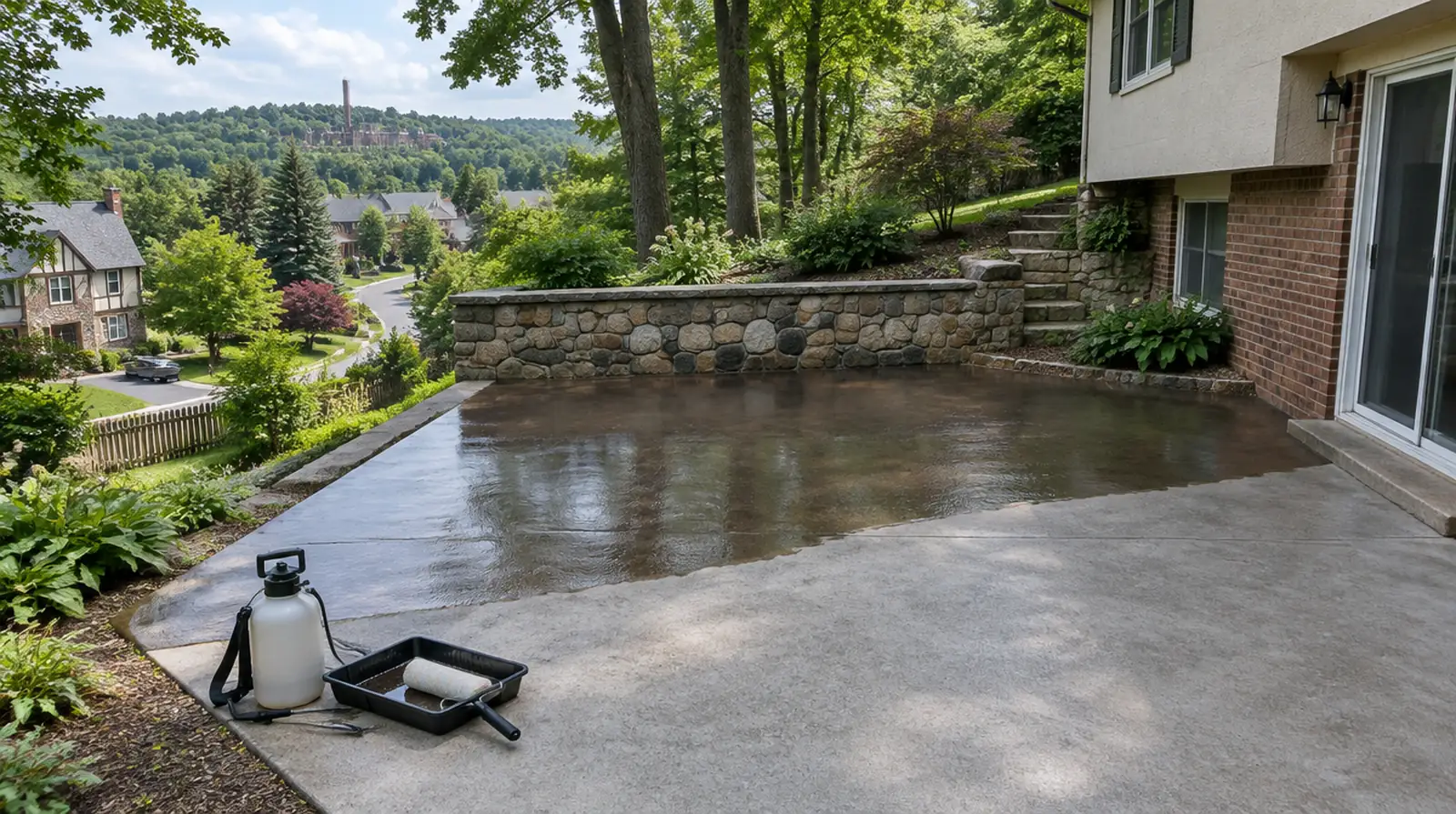
- Patios and terraces: often built on retaining walls behind split-levels and colonials.
- Pool decks: where chlorine, sun and bare feet all play a role.
- Garden apartment and condo walks: shared paths that property managers want to keep safe and tidy.
Choosing a sealer
There is no single best product. Penetrating silane and siloxane sealers leave the surface looking natural and keep the original texture, which makes them ideal for steps and steep walks. Acrylic sealers add a wet look and deepen color, which suits stamped or colored patios. Polyaspartic and urethane finishes give the toughest surface for pool decks and outdoor kitchens where grease and stains are a concern. During the estimate we look at the concrete, the slope and how the area is used, then recommend one option with a clear reason.
Preparation and repairs
We clean every surface with a pressure washer and the right detergent for the stains present, whether that is oil, rust from patio furniture, leaf tannins or mildew. Loose or flaking areas are scraped back to sound concrete and patched with a polymer-modified repair mortar. Broken step corners and nosings can be rebuilt and shaped to match. Joints and cracks get a flexible filler so water cannot reach the base. Only after everything is dry do we apply sealer.
Older steps and walks
Many homes in town have steps and walks poured decades ago, sometimes with stone or brick borders. Old concrete can still have plenty of life if it is sealed before the damage spreads. We will be honest when a set of steps is too far gone; in that case we focus on protecting the sections worth saving and point you toward replacement for the rest.
Traction and safety
Steps must stay grippy in rain and ice. We favor finishes that keep the broom texture and add anti-slip grit to any film-forming product. Treads and landings get special attention. You get protection without a slippery surface underfoot.
Timing and upkeep
Most stoops and walks are done in a single day, with foot traffic allowed in a few hours. Patios and pool decks may take two days. We recommend resealing every three to five years, depending on product and exposure. Between applications, shovel promptly and use a gentle ice melt instead of rock salt. Want the whole property protected? Add driveway coating or a garage floor coating in the same visit.
Stamped and colored concrete
Decorative patios lose their color quickly when the original sealer wears away. We strip any cloudy or peeling film, clean the pattern joints and apply a fresh tinted or clear sealer that brings the color back. Adding a fine grit keeps the textured surface safe around grills and pool edges, and regular resealing keeps the stone pattern looking crisp for years.
to seal your steps and walks.
Call (973) 520-0632 for a free estimate.